
House extensions · Insurance
What insurance you need while an extension is built: what to tell your home insurer and when, what your builder and architect should hold, and a checklist that follows the project from design to completion.
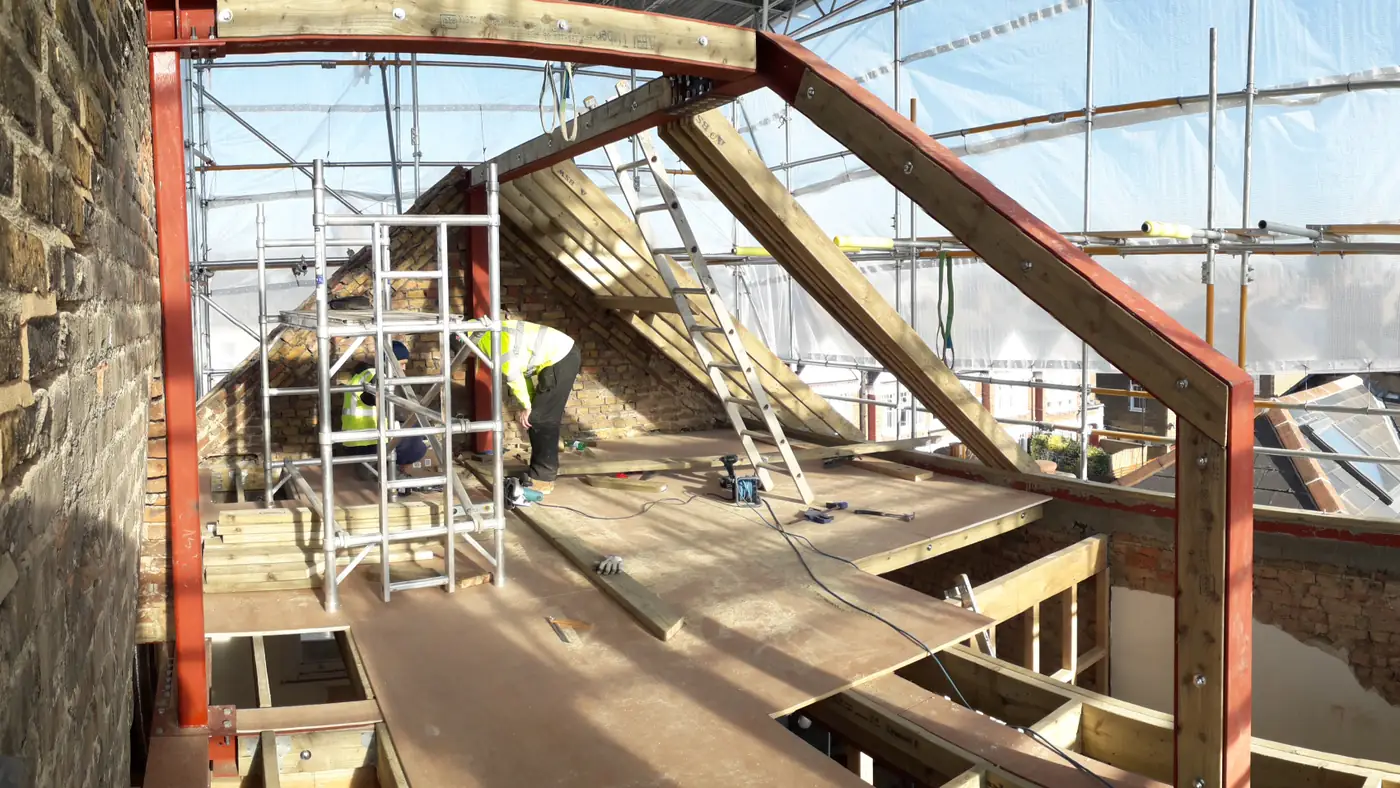
Tell your home insurer before an extension starts. Most insurers ask to know about building work, and it can change what your policy covers, especially if the house will be empty. When you take out or change a policy, you must take reasonable care not to misrepresent your home. Your builder should hold its own insurance, and your contract should say who insures what.
Key takeaways
- Check your home policy before work starts. Many policies limit cover during building work, or while the house is empty.
- Three parties carry insurance on an extension: you, your builder and your design team. Each covers different risks.
- If your builder employs anyone, it must hold employers’ liability insurance of at least £5 million by law.
- Ask for your builder’s insurance certificates at tender, and check the dates cover the whole build.
- At completion, tell your insurer about the extension and keep the building control completion certificate.
AURA is an architecture practice, not an insurer or broker. This guide explains how insurance fits into a building project; for advice on a policy, speak to your insurer or a broker authorised by the Financial Conduct Authority.
Contents
What insurance do you need for an extension?
You need your own home insurance to keep working during the build, which may mean extra cover or a specialist renovation policy. Your builder needs its own insurance for the people and the work on site, and your architect and engineer carry professional indemnity insurance for their design. Your building contract decides who insures the existing house and the new work while it’s being built.
| Cover | Who holds it | What it’s for | What to ask for |
|---|---|---|---|
| Home buildings and contents insurance | You | Your house and belongings, before, during and after the works | Written confirmation of cover during the build, and any conditions |
| Renovation or site insurance | You, if your insurer requires it | The house while works are under way or it’s empty | The policy wording on works, unoccupancy and materials on site |
| Public liability | Your builder | Injury to other people or damage to their property, such as a neighbour’s house | A current certificate, the level of cover, and the dates |
| Employers’ liability | Your builder, if it employs anyone | Injury to the builder’s own staff; at least £5 million by law | A current certificate |
| Contract works (all risks) | Your builder or you, as the contract says | The new work and materials until handover | Who insures the works and the existing house, in writing |
| Professional indemnity | Your architect and engineer | Mistakes in the design or advice | Confirmation that they hold it, and the level; AURA holds £2,000,000 for any one claim |
Does your home insurance cover building work?
Often not fully. A standard home policy is written for a house in everyday use, and many limit cover while building work is going on, while contractors are on site, or while the house is empty for a stretch. It’s worth checking the wording before you sign a building contract.
Two gaps catch people out. The first is the house standing empty: if you move out during the works, many policies restrict cover after a set number of days, so check yours. The second is damage from the work itself: many policies exclude damage caused by faulty workmanship, which leaves the question of whether the builder’s insurance pays, and that depends on proof of fault.
Your insurer may offer extra cover for the works, or point you to a specialist renovation policy. If the builder will hold cover that protects the existing house under the contract, your insurer may want to know that too.
Do you need to tell your home insurance about an extension?
Usually, yes: check your policy wording before work starts. Most insurers ask you to tell them about building work and structural changes. The law also says that when you take out or change a policy, you must take reasonable care not to misrepresent your home, so the answers you give at renewal should reflect the extension. Then tell them again when it’s finished.
An extension makes the house bigger, so it usually costs more to rebuild, and new rooms often mean more contents. If the insurer doesn’t know, a claim could be reduced or refused, depending on the policy and what happened. The table sets out what to tell them, and when.
| When | What to tell your insurer |
|---|---|
| Before you sign the building contract | What’s being built, the start and finish dates, who the builder is, and whether you’ll live in the house during the works |
| Before you move out, if you do | The dates the house will be empty, and check the policy’s unoccupancy terms |
| If the scope changes | For example a loft added, or a longer programme |
| At completion | The finished extension, the new rebuild value and any new contents; keep the completion certificate |
Your insurance checklist, stage by stage
- Design: read your home policy’s wording on building work and unoccupancy.
- Tender: ask every builder for their insurance certificates with their price.
- Contract: confirm in writing who insures the existing house and the new work.
- Before the start: tell your insurer the works, dates and builder; arrange extra cover if needed.
- During the build: check the builder’s cover hasn’t lapsed if the programme runs long.
- Completion: keep the completion certificate and update your insurer with the new rebuild value.
What insurance should your builder have?
Your builder should hold public liability insurance, for injury to other people and damage to their property, and employers’ liability insurance if it employs anyone, which the law requires at no less than £5 million. Many builders also insure the works themselves until handover. AURA’s building contracts require the contractor to carry public liability insurance of at least £5 million. Ask for the certificates with their price, not on the first day on site.
| Check | Why it matters |
|---|---|
| The certificate is in the company’s legal name | The name on the contract and the policy should match |
| The policy dates cover the whole build | Cover that lapses halfway leaves a gap |
| The level of public liability cover | Damage to a neighbour’s house can be expensive |
| Subcontractors are covered | Most extensions involve several trades |
| Who insures the works and materials on site | Theft or damage before handover needs an owner |
| Who insures the existing house during the works | The contract decides; your insurer may need to know |
If you’re using more than one contractor, check each one’s cover, and tell your own insurer, because responsibility is split. Check a builder’s reviews and recommendations too, and ask to see proof of their insurance and what it covers.
What does extension insurance cover?
A renovation or extension policy is designed for the risks of the build itself. Policies differ, so read the wording and compare what each insurer covers. These are the risks a policy for extension and renovation work generally addresses, and what to check for each.
| Risk | What to check |
|---|---|
| Damage to your existing property | Whether damage caused by the works is covered, and any faulty workmanship exclusion |
| Injuries or accidents on site | How it sits alongside the builder’s public and employers’ liability |
| Theft of contents or building materials | Whether materials stored at the house are covered, and any security conditions |
| Materials and equipment kept at your home | Who owns them until they’re built in, and whose policy covers them |
| The property being unoccupied | How many days it can be empty, and what conditions apply |
First step
Plan the whole project before you build
Our Concept Feasibility Package sets out sketch options for your house and a preliminary cost plan, so you know the scope, the consents and the budget before you talk to builders and insurers.
Who insures the works under your building contract?
The building contract should say who insures the existing house, who insures the new work and materials, and what happens if something goes wrong before handover. Get it in writing before work starts. If the contract puts the existing house on you, your home insurer needs to agree to cover it during the works.
On AURA projects, the drawings go to three or four contractors to price, and the building contract is agreed before work starts. We usually use the JCT Minor Works Building Contract with contractor’s design, and on larger jobs the JCT Intermediate Building Contract with contractor’s design. Our contracts require the contractor to carry public liability insurance of at least £5 million.
Who insures the existing house and the works varies by contract. JCT contracts give two main options:
- A joint-names policy taken out by you: one policy, in your name and the contractor’s, covers the existing house and the new works.
- The contractor insures the new works only: the contractor’s policy covers the new work and materials, and the existing house is not part of it, so you need to know how your own policy covers it during the build.
Your architect will set out which option applies in the contract. Before you sign, check with your insurer that your own policy works alongside it.
Your duties under the Construction (Design and Management) Regulations 2015 usually pass to the contractor on a domestic project. Our guide to CDM regulations for homeowners explains how.
A worked example: a rear extension, from design to completion
Take a rear kitchen extension on a Victorian terrace. At design stage, the owners read their home policy and find it limits cover during building work and while the house is empty. At tender, each builder sends insurance certificates with its price. The contract states who insures the existing house and the new work, and the owners call their insurer with the dates and the builder’s name.
The kitchen will be out of use for part of the build, so the family plans to stay away for a few weeks; they check the unoccupancy terms before leaving. Halfway through, the programme slips by a month, so they check the builder’s cover still runs. At completion, they keep the building control completion certificate and tell the insurer about the extra room, so the rebuild value is right.
Where insurance sits among the other steps, such as planning, party wall notices and building regulations, is set out in our guide to the home renovation process.
What can go wrong, and how to avoid it
Most insurance problems on an extension come from gaps between policies: something nobody is covering, or a policy that lapsed or was never updated. A short check at each stage of the project closes most of them.
The builder’s cover lapses mid-job. Check the dates on the certificates against the programme, and ask for renewed certificates if the build runs on.
The house is empty longer than the policy allows. Tell your insurer before you move out and agree the cover for the whole period.
The rebuild value isn’t updated. A bigger house costs more to rebuild. Update it at completion, not at the next renewal.
No completion certificate. Insurers and buyers ask for it. Our guide to building control explains how it’s issued.
FAQs
Will my home insurance go up after an extension?
It may. A bigger house usually costs more to rebuild, and new rooms often mean more contents, which can raise the premium. Your insurer can tell you once you give them the finished size and the new rebuild value. Ask before work starts, so it’s part of your budget rather than a surprise at renewal.
What happens if I don’t tell my insurer about building work?
It depends on the policy and what happened. If the insurer asked about building work or changes to the house and the answer was wrong, or the policy says to tell them, a claim could be reduced or refused. The safest course is to tell them before work starts and again at completion, and to keep their reply in writing.
Do I need extra insurance for an extension under permitted development?
The planning route doesn’t change the insurance. A permitted development extension involves the same building work, contractors and risks as one with planning permission, so the same checks apply. Our planning permission vs permitted development guide covers the planning side.
Is my neighbour’s house covered if the works damage it?
Damage to a neighbour’s property is usually a matter for the builder’s public liability insurance, if the builder caused it. Where the work is covered by the Party Wall etc. Act, a schedule of condition records the neighbour’s house before work starts, which makes any claim easier to settle. Our guide to party wall agreements explains how.
What does extension insurance cost?
It depends on the house, the size and length of the works, whether the house will be empty, and the insurer. We don’t quote insurance prices: ask your own insurer first, then compare a specialist renovation policy or speak to a broker authorised by the Financial Conduct Authority.
Talk to an architect about your house
Planning an extension? We’ll show you where planning, contracts, insurance and certificates fit into the programme, in a consultation.
Sources
- Consumer Insurance (Disclosure and Representations) Act 2012, section 2: https://www.legislation.gov.uk/ukpga/2012/6/section/2
- Royal Borough of Kensington and Chelsea, Employers’ liability compulsory insurance (at least £5 million): https://www.rbkc.gov.uk/business-and-enterprise/health-and-safety/employers-liability-compulsory-insurance
- Financial Conduct Authority, Financial Services Register: https://register.fca.org.uk/
- The Construction (Design and Management) Regulations 2015: https://www.legislation.gov.uk/uksi/2015/51/contents
- AURA building contracts and fee proposals: JCT contract choice, contractor public liability requirement, AURA professional indemnity cover
Contents