Commercial to Residential Conversions

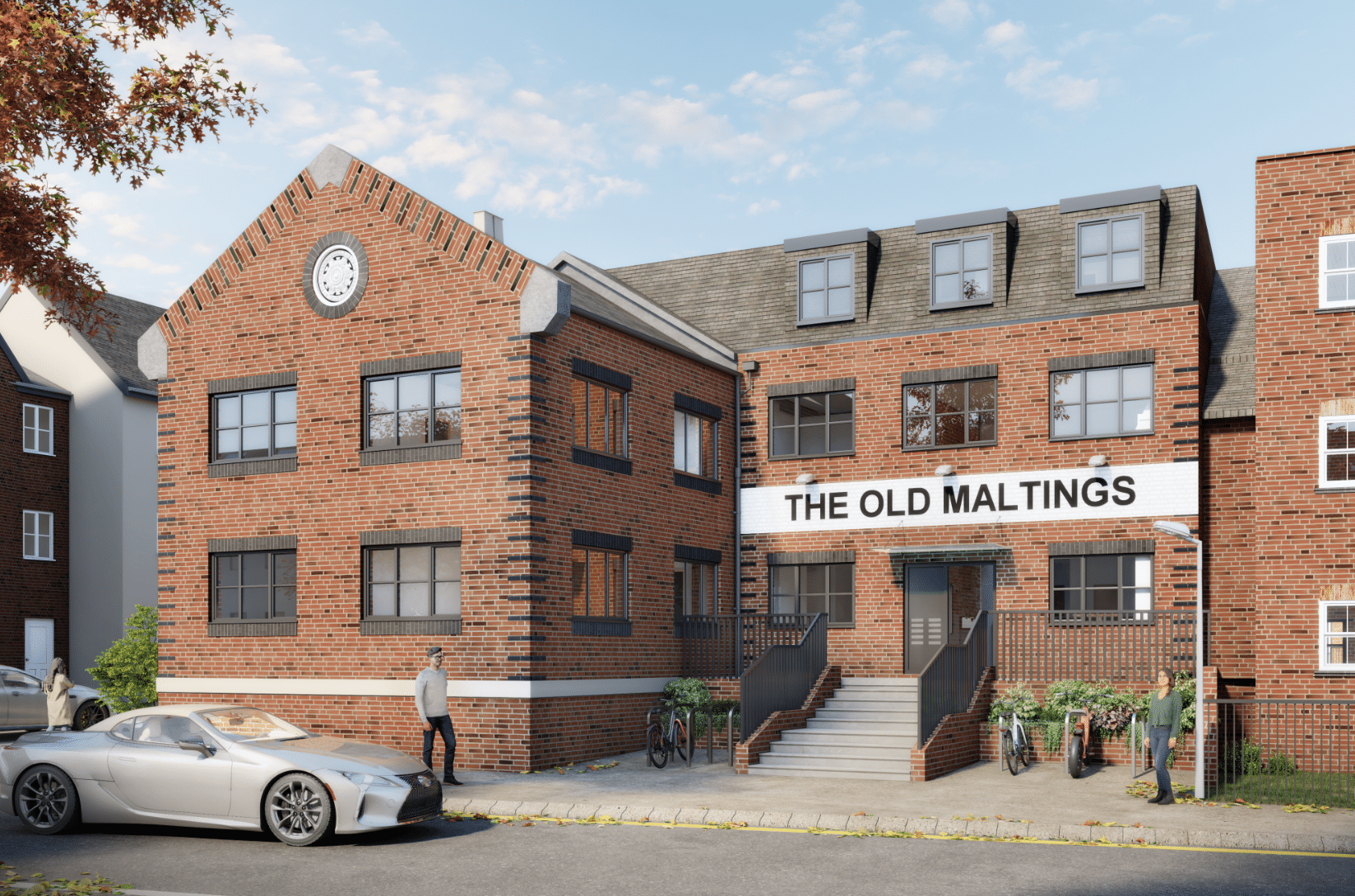
Converting commercial buildings into homes has become one of the smartest strategies in UK property development.

When done properly, commercial-to-residential conversions can unlock significant hidden value, reduce development risk, and take advantage of permitted development (PD) rights to move faster and more efficiently than traditional schemes.


With the right strategy and professional team in place, developers can transform underused offices, retail units, and light industrial buildings into high-quality homes — often avoiding lengthy planning processes, affordable housing contributions, and costly Section 106 obligations.


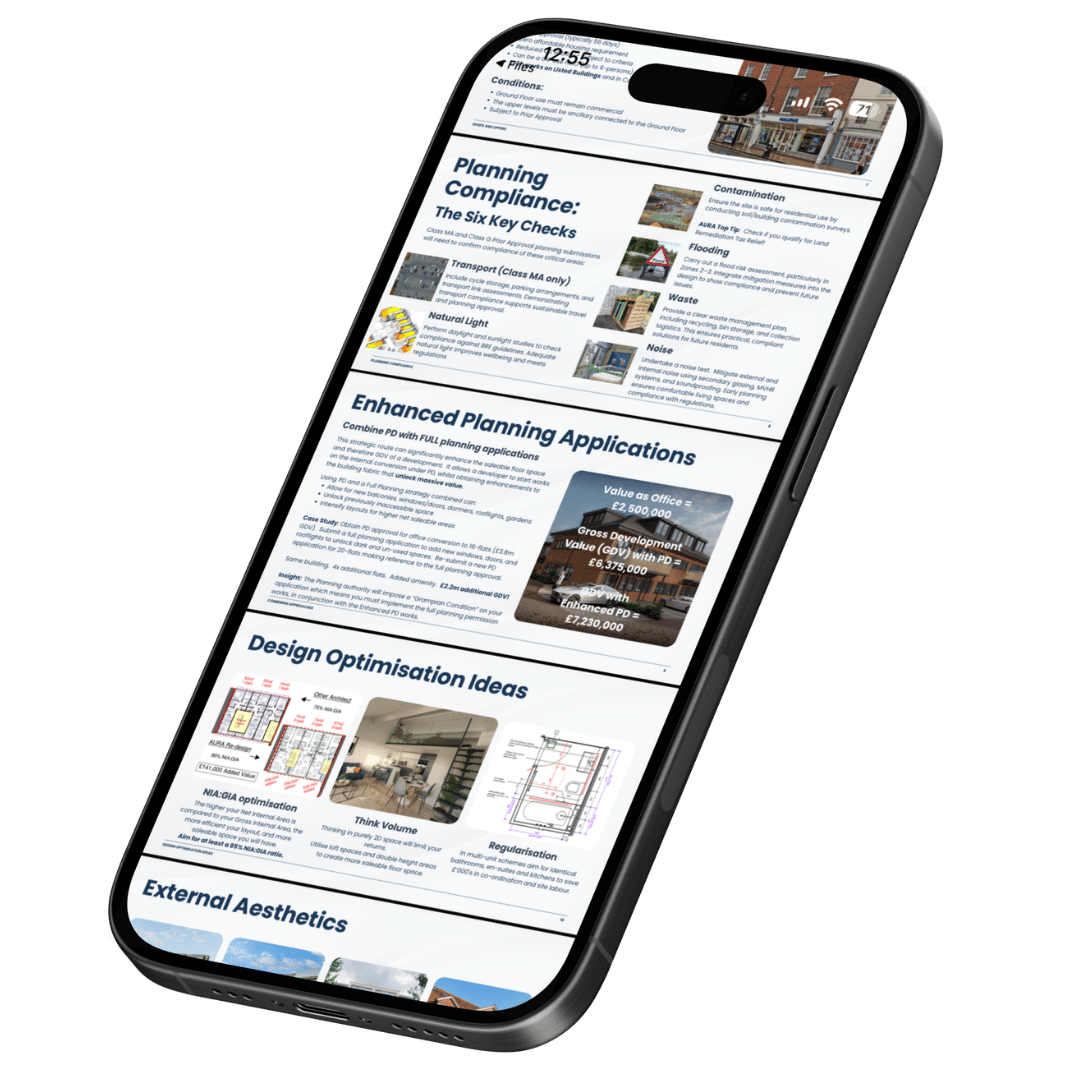
In this guide, we walk through the full journey. From identifying the right buildings and understanding prior approval, to combining PD with full planning for greater uplift, and optimising layouts, delivery, and eventual sales.


By the end of the guide, you’ll have a clear framework for turning commercial assets into profitable residential developments.

Finding the Right Buildings (and Avoiding Costly Mistakes)

Not every commercial building makes a good residential conversion — and choosing the wrong asset is one of the fastest ways to kill a project before it starts.


In the guide, we break down how experienced developers assess location, structure, legal constraints and fire compliance before committing to a purchase. From understanding which Class E buildings offer the best uplift, to spotting red flags like restrictive covenants, poor access, or inefficient structural grids, these early checks can save hundreds of thousands later on.


We also explain why some buildings that look attractive on paper — such as older Victorian stock or poorly configured industrial units — can be far more expensive to convert than modern office blocks. If you want a clear framework for assessing viability quickly and confidently, this section alone is worth downloading the guide.

Architects Near Me

Using Permitted Development to Unlock Speed, Value and Uplift

Permitted Development is one of the most powerful tools available to developers — but it’s also one of the most misunderstood.


Inside the guide, we demystify Prior Approval and explain exactly how Class MA and Class G work in practice. You’ll learn which property types qualify, what councils can (and can’t) assess, and how developers are using PD to move from acquisition to site far faster than traditional planning routes allow.


Crucially, we also show how PD doesn’t have to be the end of the story. The guide explores how combining PD with a full planning application can dramatically increase net saleable area, improve daylight and layouts, and add millions to GDV — all while works are already underway. This is where many developers leave money on the table.

Designing, Delivering and Selling for Maximum Return

A successful conversion isn’t just about getting approval — it’s about what you build, how you build it, and who you sell it to.


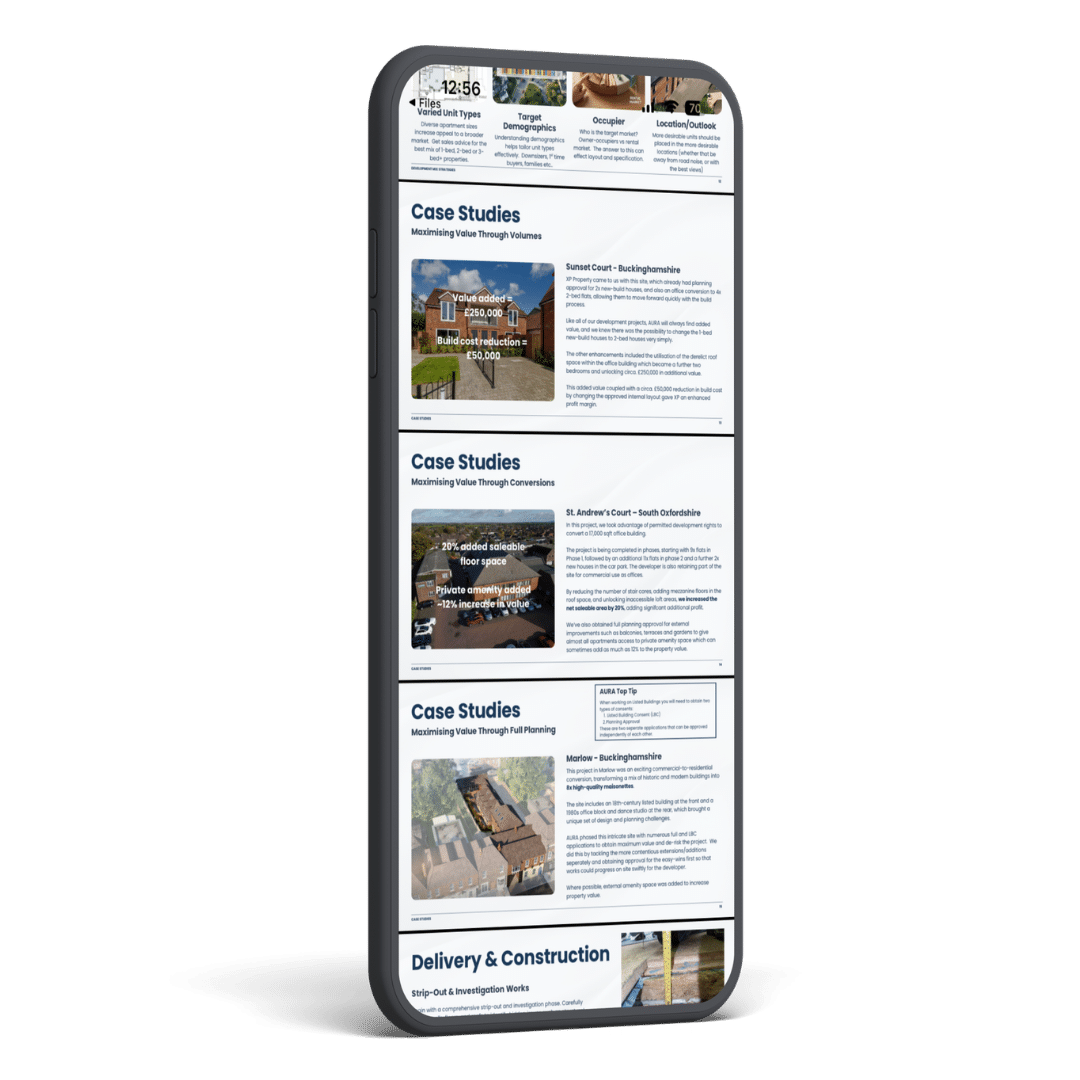
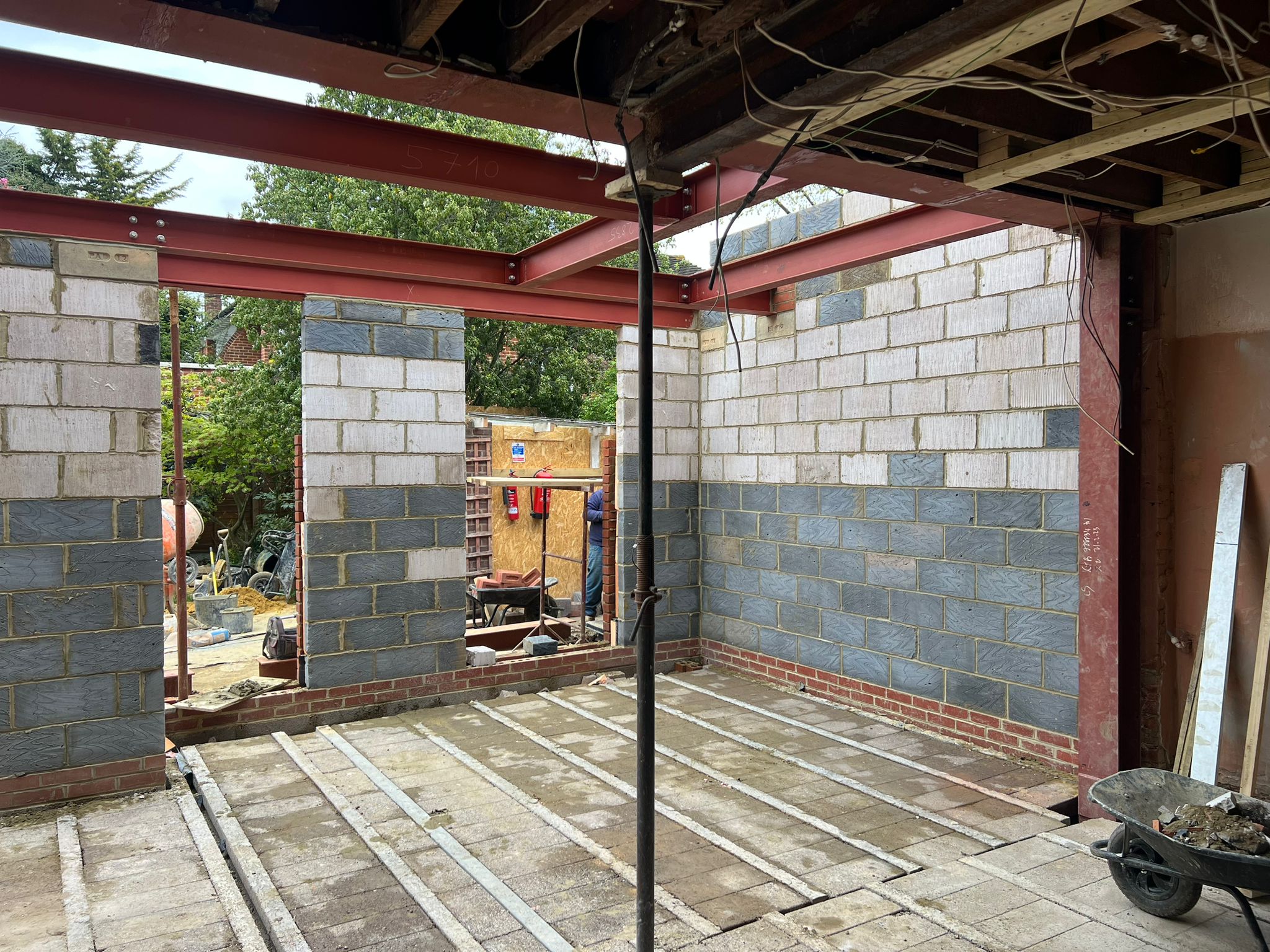
The guide goes beyond planning and into design optimisation, construction strategy, and sales-led thinking. We cover how to maximise NIA, simplify layouts to reduce build costs, and design apartments that genuinely perform better on the market. From unit mix strategy and target demographics to interior design that elevates values rather than becoming an afterthought, every decision impacts your bottom line.


We also highlight the most common risks we see developers face — from fire strategy delays to over-engineering and MEP mistakes — and how to avoid them. If your goal is to reduce risk, improve margins, and deliver schemes that stand out to buyers, the full guide pulls it all together.

Tell us about your project

Contact Us