
Basements · Costs
What a basement conversion in London costs, how converting a cellar differs from digging a new basement, and what planning, party wall and waterproofing involve, from an architect’s view.
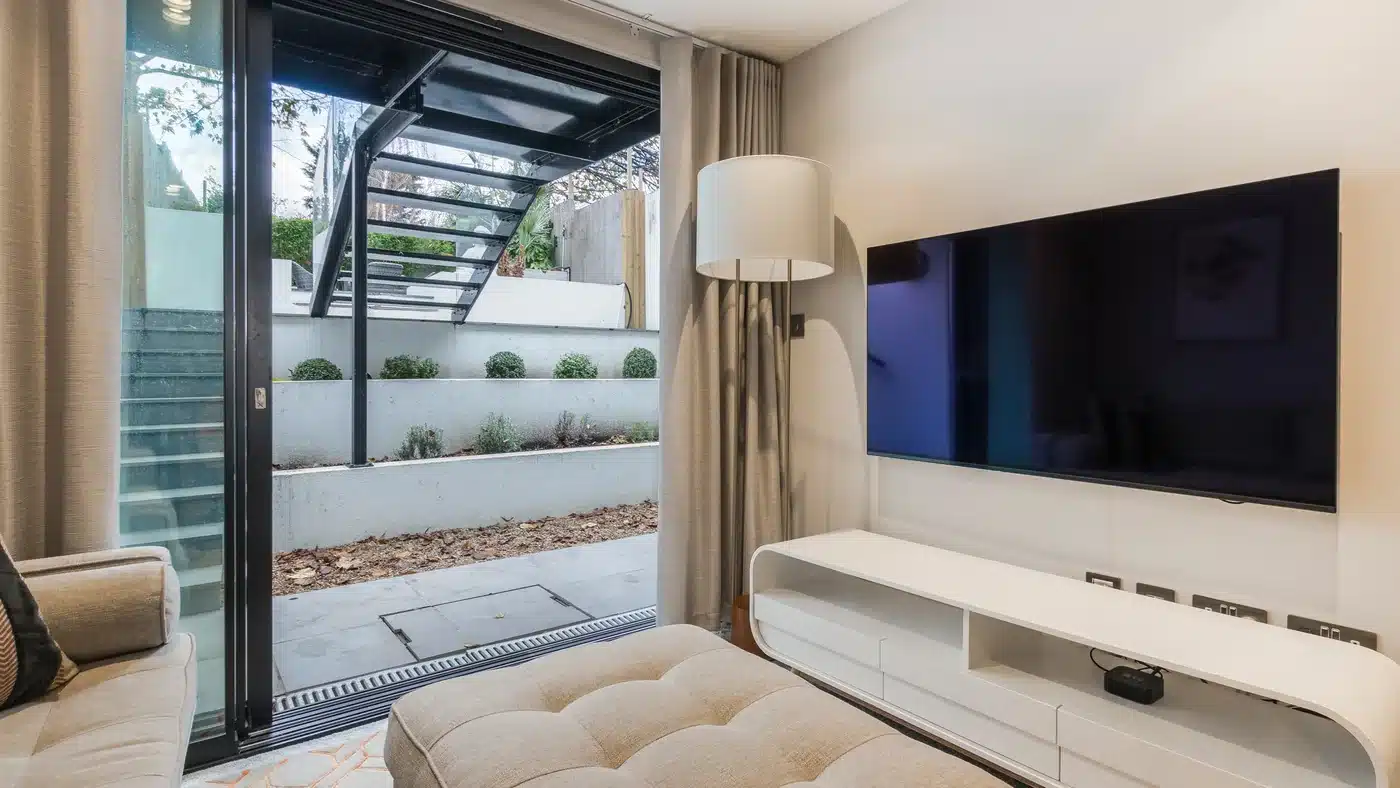
A new basement under a London house costs approx. £3,000 to £4,500 per m² of extra floor space with underpinning, and approx. £2,500 to £3,500 per m² under the garden, on AURA’s guide rates. Converting an existing dry cellar with enough headroom usually costs less, because there’s little or no digging. Fees, party wall costs, surveys and a healthy contingency sit on top.
Key takeaways
- There are three routes, and they cost very differently: convert an existing cellar, lower its floor, or dig a new basement.
- Converting an existing cellar is unlikely to need planning permission, unless you add a lightwell, change the outside or create a separate home. A new basement commonly does.
- Digging close to a neighbour’s foundations needs a party wall notice at least one month before work starts.
- Design the waterproofing first. A leak below ground is hard to trace and expensive to fix.
- Building regulations apply to basement work: fire escape, ventilation, ceiling height, damp proofing and wiring.
The figures here are approximate and meant to give you an idea, not a quote. Every house and brief is different, so your costs and programme will depend on your project.
Contents
How much does a basement conversion cost in London?
It depends on which of three routes your house needs. Converting a dry cellar that already has the height is the least work. Lowering a cellar floor means underpinning. Digging a new basement under the house or garden is the most involved. Our guide rates for new basement space are approx. £3,000 to £4,500 per m² under the house and £2,500 to £3,500 per m² under the garden.
| Route | What’s involved | What pushes the cost up |
|---|---|---|
| Convert an existing dry cellar | Waterproofing, insulation, services, finishes, a proper stair; the floor stays where it is | Damp, low headroom, getting light in |
| Lower an existing cellar floor | Digging down and underpinning the walls, then everything above; lowering by about 400 mm can mean rebuilding the existing stair | Depth, ground conditions, party walls, the stair |
| New basement under the house | Excavation and underpinning under the existing house, structure, waterproofing, fit-out | Site access and spoil removal, ground and water table, party walls |
| New basement under the garden | Open excavation in the garden, new structure, waterproofing, fit-out | Access, walk-on rooflights and lightwells, drains and trees |
Our guide rates cover London and the South East. Site access and logistics play a large part, which is why the ranges are wide.
The rate is the build cost. Your budget needs the items on top of it too, and on a basement some of them are larger than on an extension, because there’s more to survey and more neighbours to notify.
| On top of the rate | Figure | What to know |
|---|---|---|
| Professional and statutory fees | About 12% of the build cost on average | From our analysis of hundreds of projects; see the renovation cost guide for how it’s worked out |
| Party wall surveyors | As published on our fees page: about £200 per notice, about £900 to £2,000+ per award | An award is needed only if a neighbour doesn’t consent |
| Thames Water build-over agreement | Class 1 £130, Class 2 £490, Class 3 £585 plus legal costs from £1,000 | Only within 3m of a public sewer or 1m of a public lateral drain; Thames Water’s area only; fees change every 1 April |
| Planning application | £548 (householder, from 1 April 2026) | A new basement commonly needs permission |
| Contingency | A healthy contingency, set for your house | Digging down finds things no survey can see |
A worked example: 40 m² under a London terraced house
Take a new 40 m² basement under a mid-terrace house, with underpinning to both party walls. This is illustrative, built from the guide rates above.
| Line | How it’s worked out | 40 m² basement |
|---|---|---|
| Build cost | 40 m² x £3,000 to £4,500 | £120,000 to £180,000 |
| Professional and statutory fees | About 12% of the build cost | £14,400 to £21,600 |
| Party wall notices | 2 neighbours x about £200 | About £400 |
| Party wall awards, if both neighbours dissent | 2 x about £900 to £2,000+ | About £1,800 to £4,000+ |
| Subtotal | Build + fees + party wall | About £136,600 to £206,000+ |
| Surveys, planning fee, contingency | As above | On top |
Converting an existing cellar: what’s involved?
Many Victorian and Edwardian London houses have a coal cellar or larder basement under the front of the house. If it’s dry, reachable by a stair and has enough headroom, turning it into a room is closer to a fit-out than a construction project. The work is waterproofing, insulation, heating, wiring, light and a safe way in and out.
Most cellars need more than that. Few were built to be lived in: they’re often damp, low and dark, so a cellar conversion usually starts with waterproofing and sometimes with lowering the floor, which brings in underpinning and the cost of the next route up. Your architect should tell you early which one your cellar is.
Headroom is the other early question. Building Regulations set no minimum room height, but a stair needs 2m of headroom over it. Lowering a floor by about 400 mm can mean rebuilding the existing stair to get that.
Converting an existing cellar is unlikely to need planning permission, according to the Planning Portal. It does if you add a lightwell, change the outside of the house, or create a separate home. Building regulations still apply: fire escape routes, ventilation, ceiling height, damp proofing and wiring are all checked.
Converted cellars make good rooms for things that don’t need much daylight:
- a wine cellar
- a sauna
- a gym
- a utility room
- a home office or reception room, where a lightwell can bring in daylight
On Melbury Gardens in SW20, for example, we’ve designed a basement with a sauna and a wine cellar for a private client.
If the cellar is part of a wider renovation, our guide to house renovation cost per m² in London covers the rest of the house.
Basement extension: under the house or under the garden?
Digging under the house means underpinning the existing walls, including the party walls, while the house stands above you. Digging under the garden is an open excavation with more room to work, and walk-on rooflights can bring daylight straight down. That’s why our guide rate is lower under the garden: approx. £2,500 to £3,500 per m², against £3,000 to £4,500 under the house.
| Question | Under the house | Under the garden |
|---|---|---|
| Structure | Underpinning the existing walls and party walls | A new retaining structure in open ground |
| Daylight | Lightwells, front or rear | Walk-on rooflights and lightwells |
| Access during works | Through the house or a front lightwell; spoil carried out | Usually easier, but only if there’s a way into the garden |
| Planning | Commonly needs permission; front lightwells face stricter rules | Commonly needs permission; garden coverage limits in some boroughs |
| AURA guide rate | Approx. £3,000 to £4,500 per m² | Approx. £2,500 to £3,500 per m² |
How a basement project runs, step by step
- Feasibility: is it a conversion, a lowered floor or a new dig? Check the borough’s basement rules.
- Surveys: ground, drainage, trees and the existing structure, before the design is fixed.
- Design and waterproofing strategy: layout, light, structure and how the basement stays dry.
- Planning: an application, often with a Basement Impact Assessment, if the work needs permission.
- Party wall and Thames Water: notices to neighbours, and a build-over agreement if a public sewer is close.
- Building regulations and tender: technical drawings, then prices from three or four contractors.
- Build: excavation and underpinning, structure, waterproofing, services, then the fit-out.
Do you need planning permission for a basement in London?
For a new basement, usually yes. The Planning Portal says excavating a new basement is likely to need planning permission because of the major works involved, and it commonly does because of the effect on the outside of the house. Converting an existing cellar is unlikely to need it, unless you add a lightwell, change the outside or create a separate home.
Many London boroughs limit how deep and how far a basement can go, so we check your council’s basement policy before design starts. Many also ask for a Basement Impact Assessment, which looks at ground conditions, drainage and the effect on neighbours. Where the council requires one, we commission it through the structural engineer.
A front lightwell visible from the street can face stricter rules on appearance. Whether any work counts as permitted development, and the routes in general, is covered in our planning permission vs permitted development guide.
Which surveys does a basement need?
Surveys before design limit the risks and give the structural engineer what they need to design the basement safely. They also make a planning application stronger, because many boroughs ask for the evidence. These are the surveys we usually recommend.
| Survey | Why it matters |
|---|---|
| Basement Impact Assessment (where the council requires it) | Commissioned through the structural engineer; shows the council the effect on ground, groundwater and neighbouring buildings |
| Geotechnical (ground investigation) | The soil and groundwater decide the structure, the dig and the waterproofing |
| Flood risk assessment | Some areas and boroughs require it; it shapes the waterproofing |
| Drainage survey | Finds drains and sewers under or near the dig, including any that need a build-over agreement |
| Topographical survey | Levels and boundaries for the design and the planning drawings |
| Arboricultural survey | Trees near the dig affect foundations and may be protected |
Party wall and Thames Water: what to sort before digging
Almost every London basement needs party wall notices. Digging within 3m of a neighbour’s building and deeper than its foundations, or within 6m in some deeper cases, needs an adjacent excavation notice at least one month before work starts. Underpinning a shared wall needs a party structure notice, at least two months ahead. A schedule of condition records the neighbour’s house before work begins.
Our guide to party wall agreements explains the notices and the 3m and 6m rules with diagrams. If you’re in Thames Water’s area and the dig is within 3m of a public sewer or 1m of a public lateral drain, you’ll usually need a Thames Water build-over agreement too.
How do you keep a basement dry? Types A, B and C
The British Standard for below-ground waterproofing, BS 8102, sets out three types of protection: a barrier (Type A), a watertight structure (Type B), and drained protection (Type C). They’re often combined. Choose the system with a waterproofing specialist at design stage, before any digging, because a leaking basement is hard to trace and expensive to put right.
| Type | How it works | What to know |
|---|---|---|
| Type A: barrier protection | A tanking membrane or coating applied to the structure keeps water out | Relies on the barrier staying unbroken; repairs mean reaching it |
| Type B: structurally integral protection | The concrete structure itself is designed to be watertight | Relies on the quality of the concrete and its joints; not suitable for every case |
| Type C: drained protection | Lets water reach the structure, then collects it in a cavity and drains it away from the rooms, usually to a pump | The pump and channels need maintenance; it manages water rather than stopping it |
On our basement projects we specify Type C (drained cavity) systems, often combined with another type. Redirecting water is more manageable and predictable than trying to stop it completely, especially next to neighbours where there’s no room to work on the outside of the walls. Ask for the paperwork and guarantees at the end; you’ll need them if you sell, and your insurer may ask for them.
How do you get daylight into a basement?
Plan the light before the layout. Lightwells at the front or back, and walk-on rooflights under a garden, are the main sources, so put the rooms that need daylight next to them. Rooms that don’t, like a utility room, wine cellar or sauna, can go in the darker parts of the plan.
Fewer internal walls let light travel further. If you need separate rooms, glazed doors and screens keep the light moving while still closing a space off. A lightwell is also an outside change, so it’s part of the planning question above.
First step
Find out what your house can take
Our Concept Feasibility Package sets out sketch options for your house and a preliminary cost plan, so you can see whether a basement, a loft or an extension gives you the most before you commit.
When we’d recommend a basement, and when we wouldn’t
A basement makes most sense when the house can’t grow anywhere else: the garden is small, the loft is already done, or the street won’t accept more upwards. It makes least sense when a dry cellar can’t be found, the ground is difficult, or a loft or rear extension would give the same rooms for less.
We’d look hard at a basement when there’s an existing cellar to build on, the rooms you want don’t need much daylight, and the borough’s policy allows what you need.
We’d suggest another route first when the garden is the only place for light and access, the water table is high, or the same floor area is available in the loft or at the back of the house. Our comparison of a basement, a loft or an extension weighs the three side by side.
Private-client basement and cellar projects we’ve worked on include Nevern Square (SW5), Fitzwilliam Road and Clapham Manor Street (SW4) and Melbury Gardens (SW20). Outside London, we’ve designed a basement for Theobalds Manor, a Grade II listed, mid-18th-century house in Hertfordshire.
If you’d like help with the design, our basement architects in London page explains how we work on basement projects.
What can go wrong, and how to avoid it
Most basement problems start as decisions left to site. They’re cheaper to solve on paper, so we settle them in the design and the tender documents. These are the ones we see come up.
The drained cavity system is left to the builder. A Type C system needs a sump, pumps, an alarm and an agreed route for the water to leave the site. Thames Water may refuse discharge to the sewer, so the route has to be designed and agreed early, with the pumps and alarm shown on the drawings.
A floor or courtyard ends up below sewer level. Lowering a basement floor or a front courtyard can put it below the sewer. Drainage then needs a pump or an anti-flood valve, and both belong in the design.
The stair stops working. Lowering a floor by about 400 mm changes the stair’s rise and the headroom over it. The stair may need rebuilding to keep 2m of headroom, so price it from the start.
Water gets in. A leak below ground is hard to find and can cost far more than the waterproofing did. Choose the system with a specialist at design stage, use an experienced installer and keep the certificates.
The ground isn’t what you expected. Digging down can uncover buried services, old foundations or a higher water table. A ground investigation and drainage survey before design narrow the surprises, and a contingency covers the rest.
Access and spoil. Every tonne of soil has to leave the site, and on a terrace that often means through the house or a front lightwell, with skips and parking suspensions on the road. Ease of access affects the cost, so plan it at design stage.
Neighbours. Late party wall notices delay the start, and a missing schedule of condition makes damage claims hard to settle. Serve the notices early and record the neighbours’ houses before work begins.
FAQs
Is a basement cheaper than an extension or a loft?
Usually not, per square metre. On our house extension cost guide rates, a basement under the house is the most expensive of the three for each m² you add, because of the excavation, underpinning and waterproofing. A basement can still be the right answer when the house has nowhere else to grow. Our basement vs loft vs extension guide compares the three.
Does a basement need building regulations approval?
Yes. The Planning Portal says building regulations apply to works on a basement, including fire escape routes, ventilation, ceiling height, damp proofing and electrical wiring, and underpinning and foundation work may be needed. Your architect prepares the technical drawings, and building control checks the work on site. Our guide to building control explains the stages.
How deep can a London basement go?
There’s no single national limit. Many London boroughs limit how deep and how far a basement can go, so we check your council’s basement policy before design starts. A listed building or a conservation area can add further limits.
Talk to an architect about your house
Tell us about your house and what you’d like the basement to do. We’ll tell you which route it needs, what your borough is likely to allow, and what to budget for, in a consultation.
Sources
- AURA, house extension cost guide (basement rates, professional and statutory fees): https://aurahomes.co.uk/blog/house-extension-cost-top-tips/
- AURA, fees page (party wall surveyor fees): https://aurahomes.co.uk/fees/
- Planning Portal, Basements: planning permission and building regulations (read 29 October 2026): https://www.planningportal.co.uk/permission/common-projects/basements/planning-permission
- GOV.UK, The Party Wall etc. Act 1996: explanatory booklet: https://www.gov.uk/government/publications/preventing-and-resolving-disputes-in-relation-to-party-walls/the-party-wall-etc-act-1996-explanatory-booklet
- LABC, Basement waterproofing and BS 8102 (11 December 2015)
- Thames Water, Do I need a build over agreement? (charges from 1 April 2026): https://www.thameswater.co.uk/help/home-improvements/do-i-need-a-build-agreement
- Planning Portal, fee schedule for applications in England from 1 April 2026 (householder application £548)
Contents