
Planning · Consents
The reasons councils refuse planning permission for house extensions, how to read your decision notice, and what to do next: revise and resubmit, or appeal within 12 weeks.
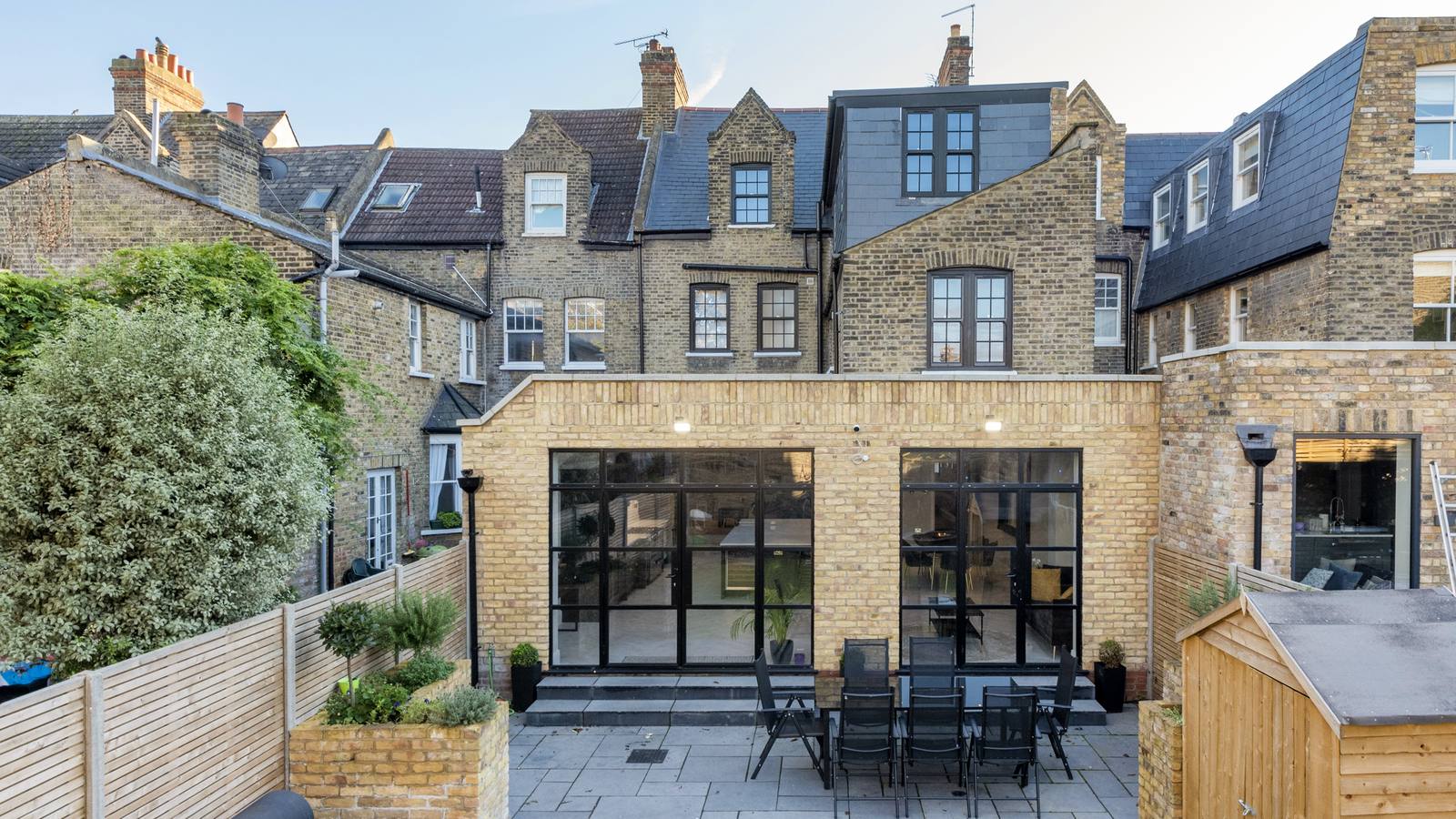
Planning permission is refused, or rejected, when the council decides a scheme conflicts with its local plan or national policy, often on design, harm to neighbours’ light, outlook or privacy, heritage, or missing information. Your decision notice lists each reason. You can then revise the scheme and apply again, usually free within 12 months, or appeal within 12 weeks.
Key takeaways
- Most householder applications are approved: 91% in England from April to June 2026 (MHCLG).
- Every refusal comes with written reasons, each tied to a planning policy. Those reasons are your brief for the next scheme.
- A revised application for the same site, of the same character, is usually free if made within 12 months of the refusal.
- A householder appeal must reach the Planning Inspectorate within 12 weeks of the decision date.
This guide is general information about the planning system in England. Every council has its own local plan and every site is different, so read your own decision notice closely.
Contents
What reasons can planning permission be refused for?
A council can only refuse planning permission for planning reasons, which planners call material considerations. Each reason on a refusal has to point to a policy in the local plan, the London Plan in the capital, or the National Planning Policy Framework. For a house extension, the reasons fall into a handful of groups.
| Reason | What the council looks at | Typical example |
|---|---|---|
| Design and character | Scale, roof form, materials and how the extension sits with the original house and the street | A flat-roofed first-floor extension on a house with pitched roofs |
| Neighbour amenity | Loss of daylight or sunlight, an overbearing outlook, overlooking and loss of privacy | A deep two-storey extension close to a neighbour’s rear window |
| Heritage | Harm to a listed building or to the character of a conservation area | Replacing timber sash windows with uPVC in a conservation area |
| Insufficient information | Whether the council has the reports it needs to judge the impact | Air conditioning units with no acoustic report |
| Trees | Harm to protected trees and their roots | Foundations inside the root area of a tree with a preservation order |
| Highways and parking | Loss of off-street parking, visibility and safe access | Converting a garage on a street with parking pressure |
| Flood risk | Building in a flood zone without a flood risk assessment | A basement or ground-floor bedroom on a site at risk of flooding |
Neighbours’ objections count only where they raise planning matters. A letter saying an extension will block light to a kitchen window is a planning point. Building noise and boundary questions fall under other laws, such as the Party Wall Act process.
Why would planning permission be refused? Reading your decision notice
The decision notice is the document to start from after a refusal. It gives the application reference, the date of the decision and a numbered list of reasons, each naming the policies the council says the scheme conflicts with. Many councils also publish the planning officer’s delegated report on the planning register, and it explains the reasoning in more detail than the notice.
Read the reasons as a brief. A reason about roof form asks for a different roof, and the extension may not need to shrink at all. Where the council says information is missing, it wants a report, and the design may be fine once that’s in. A neighbour’s light needs drawings that test it, so you can show the council where the extension stops affecting the window.
Check the notice for a reference to permitted development as well. Some houses have had their permitted development rights removed by a condition on an earlier permission, often when the house was built or last extended. That changes which route your project can take, and our guide to planning permission vs permitted development explains how the routes differ.
What refusals on our own files show
Refusals are uncommon, but they happen. Here are two from recent AURA applications in London boroughs, with the council’s reasons in summary, and a certificate granted on one of the same projects.
| Application | What was proposed | Reason on the notice | The lesson |
|---|---|---|---|
| A recent AURA application in a London borough | A single-storey rear extension and two first-floor rear extensions | The flat roofs of the two first-floor parts were judged out of keeping with the original house, and too prominent | First-floor extensions are judged on roof form and how they read from neighbouring gardens. Test the roof against the original house early. |
| A recent AURA application in another London borough | Air conditioning units at a house | Not enough information, in particular no formal acoustic assessment | Plant such as air conditioning or heat pump units needs a noise report with the application. |
| The first project again (granted) | A lawful development certificate for a garden outbuilding on the same site | Granted under permitted development (Class E) | Part of a project can often go ahead on a different route while the rest is redesigned. |
Neither refusal questioned whether the owners could extend at all. Each was about one part of the scheme, and the notice said which part the council couldn’t accept.
Planning permission refused: what next?
If your planning permission has been rejected, you have two main routes. You can change the scheme and apply again, or you can appeal to the Planning Inspectorate and ask an inspector to decide the application as it stands. Some owners do both: they appeal and submit a revised scheme in parallel, so one route is moving while the other is decided.
| Option | When it suits | Time limit | Cost to apply |
|---|---|---|---|
| Revise and resubmit | The reasons point to a specific part of the design that you can change | A fee-free resubmission must be made within 12 months of the refusal | Usually no fee for one resubmission of the same character on the same site |
| Householder appeal | You believe the scheme meets policy and the council’s reasons are wrong | Must reach the Planning Inspectorate within 12 weeks of the decision date | No planning fee to the council |
| Lawful development certificate | A smaller version of the project falls within permitted development | None, as long as permitted development rights apply to the house | £274 (proposed use or development) |
| Change the project | The reasons can’t be met without losing what you wanted from the extension | None | A full new fee if the scheme is no longer of the same character: £548 for a householder application today |
The fee rule comes from the government’s Chief Planner’s letter of 14 November 2023. The repeat-application “free go” after an approval was removed from 6 December 2023, but the letter says “an applicant will still be able to benefit from a free-go if their application was withdrawn or refused” in the preceding 12 months, subject to the other conditions. In practice that means the same applicant, the same site and a scheme of the same character or description.
A revised application goes through validation and a decision period again, so allow the same time as a first application. Our guide on how long planning permission takes sets out the stages.
How a householder appeal works
You appeal to the Planning Inspectorate online. For a householder appeal, the Planning Portal says the appeal “has to be received by the Planning Inspectorate within 12 weeks of the date of the decision”, and that you lose the right of appeal if you miss it. An inspector reads the papers, visits the site and issues a written decision. The inspector can allow the appeal, which grants permission, or dismiss it, and the decision letter explains why.
An appeal decides the scheme you submitted, so if the drawings need to change, a resubmission is usually the faster route to a permission you can build.
After a refusal: step by step
- Read the notice and the officer’s report. List each reason and the policy it names.
- Diary the deadlines: 12 weeks from the decision date to appeal, 12 months for a fee-free resubmission.
- Decide the route for each reason: answer it in a revised scheme, or argue it at appeal.
- Revise and test the drawings against every reason, then resubmit or lodge the appeal.
Worked example: the dates after a refusal
Say your householder application was refused on 2 November 2026. Here is how the deadlines fall.
| Step | Rule | Arithmetic | Deadline |
|---|---|---|---|
| Householder appeal | 12 weeks from the decision date | 12 × 7 = 84 days. 28 days to 30 November, 31 in December, 25 in January: 28 + 31 + 25 = 84 | 25 January 2027 |
| Fee-free resubmission | Within 12 months of the refusal | 2 November 2026 + 12 months | 2 November 2027 |
| Fees for the refusal plus one resubmission, at today’s rate | Householder fee £548 from 1 April 2026; free-go on the resubmission | £548 + £0 = £548, against £548 + £548 = £1,096 without the free-go. £1,096 − £548 = £548 | £548 saved |
The appeal window is the one people miss. Twelve weeks feels long, but a daylight study or an acoustic report can take weeks to commission, so decide the route in the first fortnight. The fee itself is due to change: a new national fee schedule is proposed from around 8 December 2026, subject to Parliament, which would take the householder fee to about £575.
Before you apply again
Test the scheme before it goes back to the council
Our Concept Feasibility Package sets out sketch options for your house and a preliminary cost plan, so you can see which version answers the refusal before you commit to new drawings.
How to reduce the risk of a refusal next time
Much of the work that keeps an application from being refused happens before the drawings are drawn. Our process starts with a desktop study of the site’s constraints and the local planning rules for the house, and then up to three concepts in sketch form, so the design is tested against the planning position before a full drawing set is produced.
The checks that catch refusal reasons early are these:
- The planning history of the house, including conditions on earlier permissions and whether permitted development rights still apply.
- Whether the house is listed or in a conservation area, and whether any trees on or near the site are protected.
- The council’s design guidance for extensions, which often sets out the roof forms and depths it expects.
- Which reports the council needs with the application, such as a heritage statement, a noise report for plant or a tree report.
Heritage is its own subject: if your house is listed, our guide to renovating a listed building covers listed building consent. If you’d like an architect to prepare and manage the application, our planning service page explains how we work.
Before you build: refusal and enforcement
A refusal means the work can’t go ahead as applied for. Building it anyway is a breach of planning control, and the council can take enforcement action, which can include requiring the work to be removed. If you’ve already started, stop and take advice before you do anything else.
FAQs
Can I get my planning fee back if my application is refused?
No. The fee pays for the council to decide the application, whatever the outcome. What you do get is one revised application for the same site, of the same character, without a further fee if you make it within 12 months.
Will a refusal make my next application harder?
The earlier decision and its reasons become part of the planning history of the site, and the council will look at whether the new scheme answers them. A revised scheme that deals with each reason directly is in a stronger position than the first one, because you know exactly what the council objected to.
Can a neighbour’s objection on its own get my extension refused?
The number of objections isn’t a reason to refuse. The council weighs the planning points they raise, such as daylight or privacy, against its policies. An objection that makes a sound planning point can carry weight; one about house prices or building noise can’t.
My prior approval for a larger rear extension was refused. Can I still build?
Prior approval only looks at a narrow set of matters, mainly the effect on neighbours. If it’s refused, you can change the depth or design and apply again, or make a full householder planning application, which looks at the scheme in the round.
Is a refused application visible to buyers when I sell?
Planning decisions are public and sit on the council’s planning register, so a buyer’s solicitor may see the planning history of the house. What causes trouble at sale is unauthorised work built after a refusal.
Can I appeal if the council hasn’t decided my application?
Yes. If the council misses the decision date and you haven’t agreed an extension of time, you can appeal for non-determination. The inspector then decides the application instead of the council.
Talk to an architect about your refusal
Bring your decision notice to a consultation. We’ll go through each reason with you and set out which route, a revised scheme or an appeal, fits your house and your timetable.
Sources
- MHCLG, Planning applications in England: April to June 2026 (householder decisions granted: 91%).
- Department for Levelling Up, Housing and Communities, Chief Planner’s letter, 14 November 2023 (fee increases and the free-go): assets.publishing.service.gov.uk
- Planning Portal, Householder appeals: planningportal.co.uk, read 30 October 2026
- Planning fees, annual indexation from 1 April 2026 (householder £548, lawful development certificate £274): assets.publishing.service.gov.uk
- Decision notices on AURA’s project files
Contents