
Party wall · Consents
When you need a party wall agreement, the three notices with diagrams, how long each takes, what a party wall surveyor does and what it costs, from a London architect.
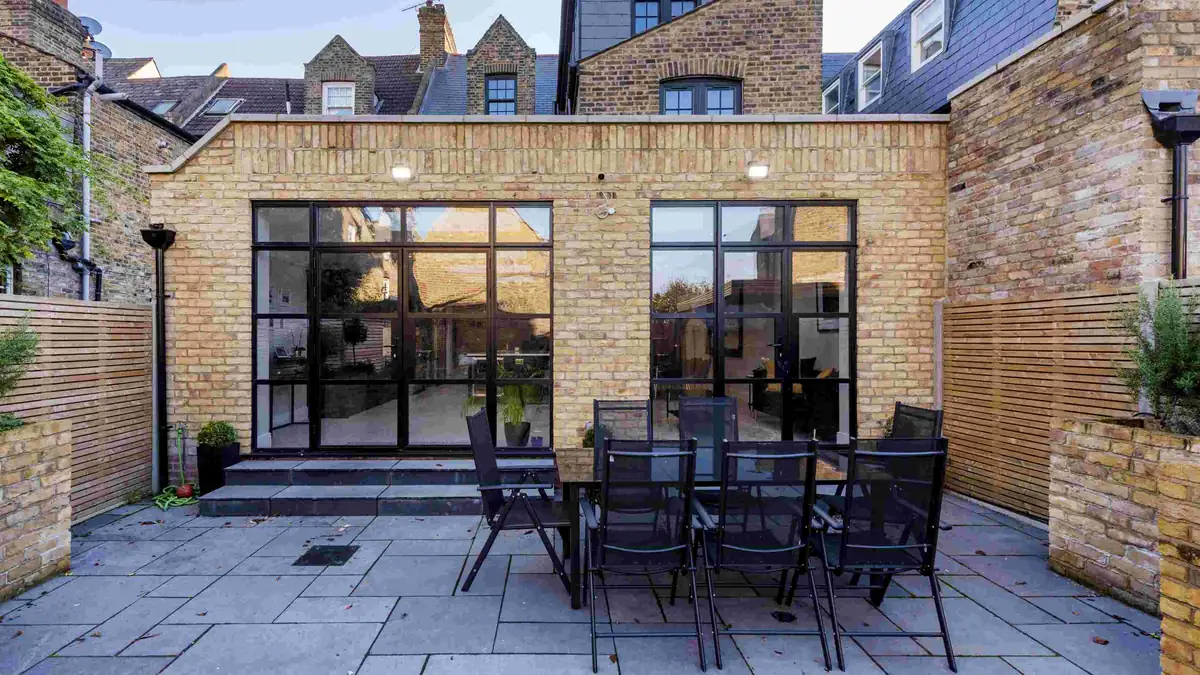
You need to serve a party wall notice whenever your work is covered by the Party Wall etc. Act 1996: at least 2 months ahead for work to a shared wall, and 1 month for a new wall on the boundary or digging near a neighbour’s foundations. A party wall agreement, called an award, is only needed if your neighbour dissents or doesn’t reply within 14 days.
Key takeaways
- Three kinds of work need notice: work to a shared wall or structure, a new wall on the boundary line, and digging within 3m or 6m of a neighbour’s building.
- If your neighbour agrees in writing within 14 days, no award is needed. If they dissent or say nothing, surveyors draw up an award.
- You can’t act as your own surveyor. You and your neighbour can share one agreed surveyor or appoint one each.
- As published on our fees page: about £200 per notice and about £900 to £2,000+ per award. Our fee proposals suggest allowing about £1,000 per neighbour.
- Party wall is separate from planning permission and building regulations. You may need all three.
The figures here are approximate and meant to give you an idea, not a quote. Every house and brief is different, so your costs and programme will depend on your project.
Contents
When do you need a party wall agreement?
You need to serve notice on your neighbour when you plan work to a shared wall or structure, build a new wall on or at the boundary, or dig close to and below their foundations. You need an agreement, called a party wall award, only if they dissent or don’t reply in writing within 14 days. The table shows which notice common London projects trigger.
| Your work | Notice | Minimum notice | Example on a London terrace |
|---|---|---|---|
| Cutting into a party wall to take a beam | Party structure notice | 2 months | Steels for a loft conversion bearing on the party wall |
| Cutting off a projection from a party wall | Party structure notice | 2 months | Removing a chimney breast on a party wall |
| Raising, underpinning or repairing a party wall | Party structure notice | 2 months | Underpinning for a basement; raising the wall for a mansard |
| Building a new wall on or astride the boundary line | Line of junction notice | 1 month | The flank wall of a side return or rear extension built on the boundary |
| Digging within 3m of a neighbour’s building, deeper than its foundations | Adjacent excavation notice | 1 month | Foundations for a rear extension next to the neighbour’s back addition |
| Digging within 6m, where the dig cuts a 45° line down from their foundations | Adjacent excavation notice | 1 month | A basement, or deep piled foundations |
| Minor work such as plastering, rewiring or putting up shelves | Usually none | · | Fitting kitchen units against the party wall |
Notice goes to every owner of the neighbouring property. Notices, awards and fees are per adjoining owner, meaning per legal title, so if the house next door is divided into flats, the freeholder and each leaseholder need their own notice. That’s why party wall costs can be a large part of an extension budget next to a block of flats. You can serve notice between 2 months and a year before you plan to start.
What is a party wall agreement?
A party wall is a wall shared with your neighbour, sometimes called an adjoining or adjacent wall: either one that stands on the boundary or one that separates your building from theirs. A party wall agreement, properly a party wall award, is the document surveyors draw up when a neighbour dissents. It sets out what work will be done, how and when, who pays for what, and records the condition of the neighbour’s property.
Its purpose is to let the building owner do lawful work while protecting the neighbour’s property. It isn’t planning permission: a neighbour can’t use it to stop work the Act allows. The terms below come up in every notice.
| Term | What it means |
|---|---|
| Party wall | A wall that stands on land of two owners and forms part of a building, or a wall that separates buildings belonging to different owners |
| Party fence wall | A garden wall that stands astride the boundary and separates the two owners’ land, but isn’t part of a building |
| Party structure | A party wall, and also a floor or other structure that separates buildings or parts of buildings, such as the floor between two flats |
| Adjoining or adjacent owner | The neighbour whose property is affected by the work |
| Building owner | The owner who wants to carry out the work and serves the notice |
| Line of junction | The boundary line between two properties |
| Award | The surveyors’ document that settles a dispute: what, how, when and who pays |
| Schedule of condition | A record, with photos, of the neighbour’s property before work starts |
The three party wall notices, with diagrams
There are three notices, one for each kind of work the Act covers: a party structure notice for work to a shared wall, a line of junction notice for a new wall on the boundary, and an adjacent excavation notice for digging near a neighbour’s foundations. A project can need more than one, for example a loft and a rear extension on the same house.
Party structure notice
You need it to work on a wall or structure you already share: cutting in to take the bearing of a beam, removing a chimney breast attached to the party wall, raising, underpinning or repairing the wall. A loft conversion with steels set into the party wall is the most common example on a London terrace. Give at least 2 months’ notice. The notice lapses if the work hasn’t started within 12 months of serving it.

Line of junction notice
You need it to build a new wall on or astride the line of junction, the boundary between your land and your neighbour’s. This covers the construction of a new party wall astride the boundary, and a wall built wholly on your side of it. The flank wall of a side return infill or rear extension built right up to the boundary is the usual case. Give at least 1 month’s notice. If the wall sits wholly on your side, the neighbour can’t stop it, but they must still be told.

Adjacent excavation notice and the 45-degree rule
You need it to dig near a neighbour’s building. Within 3m, it applies if your new foundations go deeper than theirs. Within 6m, it applies if your excavation cuts a line drawn down at 45 degrees from the bottom of their foundations: that’s the 45-degree rule. A basement under the house, or deep foundations for an extension, are typical examples. Give at least 1 month’s notice.

How the party wall process works, step by step
You serve notice in writing. Your neighbour has 14 days to reply in writing. If they consent, you can go ahead once the notice period has run. If they dissent, or don’t reply at all, a dispute is treated as having arisen and surveyors are appointed to agree an award. Silence never counts as agreement.
The party wall process
- Serve notice on every adjoining owner: 2 months ahead for a party structure, 1 month for a line of junction or excavation.
- Within 14 days your neighbour replies in writing: consent, dissent, or a counter notice asking for extra work (within a month).
- If they consent, no award is needed. A schedule of condition is still worth doing.
- If they dissent or don’t reply, one agreed surveyor, or one each, is appointed.
- The surveyors record the neighbour’s property and agree the award: the work, how and when, and the costs.
- Work starts once the award is served and the notice period has run.
If your neighbour won’t appoint a surveyor, you can appoint one on their behalf, so a silent neighbour can’t stall the work indefinitely. Party wall notices are one of several things settled before building starts, and our guide to the stages of a house extension puts them in order.
Do you need a party wall surveyor?
You don’t need one to serve a notice, but many owners appoint one to do it properly. You do need surveyors if your neighbour dissents or doesn’t reply. You can’t act as your own surveyor. You and your neighbour can share one agreed surveyor, or appoint one each, and the surveyors then agree the award between them.
A party wall surveyor serves the notices, records the neighbour’s property in a schedule of condition, agrees the award with the other surveyor, and settles any later claim that the work caused damage. The schedule of condition matters most: if a crack appears during the works, it shows whether it was there before.
With one agreed surveyor, there’s one fee. If your neighbour appoints their own surveyor, which is their right, you usually pay that surveyor too. As a guide, recent quotes we’ve seen from a London firm (October 2026) were about £1,650 + VAT for an agreed surveyor, and typically £1,200 to £1,700 + VAT for a neighbour’s own surveyor. Treat them as examples: your surveyor will quote for your job.
How much is a party wall agreement?
As published on our fees page, serving a notice costs about £200, and an award, if one is needed, about £900 to £2,000+. You pay for the building work and usually for the process it triggers. Your neighbour pays a share only if the work fixes a defect or disrepair, or if they ask for extra work that benefits them.
| Item | Approx. figure | Who usually pays |
|---|---|---|
| Serving a notice | About £200 per notice | You (the building owner) |
| An award, if the neighbour dissents or doesn’t reply | About £900 to £2,000+ per award | You; the award sets how the surveyors’ costs are shared |
| Budget allowance in AURA’s fee proposals | About £1,000 per neighbour | You |
| Recent quotes we’ve seen (one London firm, October 2026) | About £1,650 + VAT as an agreed surveyor; £1,200 to £1,700 + VAT for a neighbour’s own surveyor | You, usually for both surveyors |
| The building work itself | Your build cost | You |
| Work that fixes a defect or disrepair, or extra work the neighbour asks for | Set in the award | Shared, or the neighbour |
A worked example: a rear extension on a mid-terrace
Take a rear and side return extension on a mid-terrace house in SW London. The new flank wall is built on the boundary with one neighbour, and the foundations are within 3m of both neighbours’ houses and deeper than theirs. That’s the typical pair on a terrace extension: a Section 1 (line of junction) notice to the first neighbour, and a Section 6 (adjacent excavation) notice to each. Three notices at about £200 each come to about £600.
If both neighbours consent, that’s the cost. If both dissent, there’s an award for each adjoining owner, at about £900 to £2,000+ each on our fees page figures, so about £1,800 to £4,000+. AURA’s proposals suggest allowing about £1,000 per neighbour, so about £2,000 here. If each neighbour appoints their own surveyor, budget more: you usually pay their surveyor as well as your own. Serve the notices at least 1 month before the work they cover, and allow at least 2 months in the programme.
When to serve notices on your project
We serve notices once the structural design exists, because they need the engineer’s foundation details. Allow at least 2 months from serving to starting work on the party walls, so any award is in place before the builder starts. Party wall is separate from planning and building regulations: you may need all three, and planning approval doesn’t replace notice.
Whether you need planning permission is covered in our planning permission vs permitted development guide.
Party wall costs are one line in the budget. For the build cost itself, see our house extension cost guide.
First step
See what your scheme triggers before you go further
Our Concept Feasibility Package sets out sketch options for your house and a preliminary cost plan, so you know early which notices, consents and costs your project will need.
What can go wrong, and how to avoid it
Most party wall problems are about timing and records. Notices served late push back the start date, notices sent to the wrong people have to be served again, and without a schedule of condition a damage claim turns into one word against another. Each is avoidable with a little planning.
Notices served too late. Two months for a party structure notice is the minimum, and a dissent adds the time to agree an award. Build it into the programme before you book a builder.
The wrong owners. Next to flats, all leaseholders and the freeholder need to be served. Check the title before notices go out.
No schedule of condition. Record the neighbour’s property before work starts, even if they consent. It protects both sides.
Award costs left out of the budget. If a neighbour dissents, you’ll usually pay the surveyors. Budget for it from the start, and keep a good relationship with your neighbours: it keeps a project moving.
Party wall worries turn into planning objections. On our projects, neighbours sometimes raise party wall concerns as objections to the planning application. Planning doesn’t decide party wall matters, but the objection can still slow the decision. Talking to neighbours before you apply, and explaining that the party wall process protects them, helps.
A chimney breast on a shared stack. Removing a chimney breast where the stack is shared with next door is a common cause of delay we’ve seen. It needs a party structure notice, two months ahead, and support for the stack above, so plan it early.
FAQs
Is there a party wall agreement template?
There’s no standard agreement to download, because an award is written by the surveyors for your particular work. What you serve first is a notice, and the government’s explanatory booklet on the Party Wall etc. Act 1996 explains what the notices are for and how the process runs. A surveyor can prepare and serve the notices for you.
Do I need a party wall agreement for a garden room?
Only if the work is covered by the Act. If a wall of the garden room is built on or astride the boundary line, that’s a line of junction notice. If its foundations are within 3m of a neighbour’s building and deeper than theirs, that’s an adjacent excavation notice. A garden room set back from the boundary on shallow foundations often needs neither.
Can my neighbour stop my extension through the party wall process?
No. The Act doesn’t give a neighbour a veto over work it allows. If they dissent, the surveyors settle how and when the work is done and how their property is protected. Whether the extension is allowed at all is a planning question, decided separately.
Does a party wall notice expire?
A party structure notice stops having effect if the work hasn’t begun within 12 months of the day it was served and isn’t carried on with due diligence. If your start slips by more than a year, you’ll need to serve it again.
Do I need party wall notices in a flat or maisonette?
Often, yes. The floors and walls between flats are party structures, so cutting into them, or into the shared walls, can need a party structure notice to the owners above, below or next door. In a converted house that can mean several owners, including the freeholder.
Can I serve a party wall notice myself?
Yes. The notice has to be in writing and go to every owner of the neighbouring property, and you can serve it yourself. What you can’t do is act as your own surveyor if a dispute arises. Many owners ask a surveyor to prepare and serve the notices, so the details are right first time and the timing isn’t lost to a notice that has to be served again.
Talk to an architect about your house
Tell us what you’re planning. We’ll show you which party wall notices your scheme triggers, and how to fit them into the programme, in a consultation.
Sources
- GOV.UK, Party walls and building work: https://www.gov.uk/party-walls-building-works
- GOV.UK, The Party Wall etc. Act 1996: explanatory booklet: https://www.gov.uk/government/publications/preventing-and-resolving-disputes-in-relation-to-party-walls/the-party-wall-etc-act-1996-explanatory-booklet
- Party Wall etc. Act 1996, sections 1, 2, 3, 6 and 20: https://www.legislation.gov.uk/ukpga/1996/40
- AURA, fees page (party wall surveyor fees): https://aurahomes.co.uk/fees/
- AURA fee proposals and recent party wall surveyor quotes (October 2026)
Contents